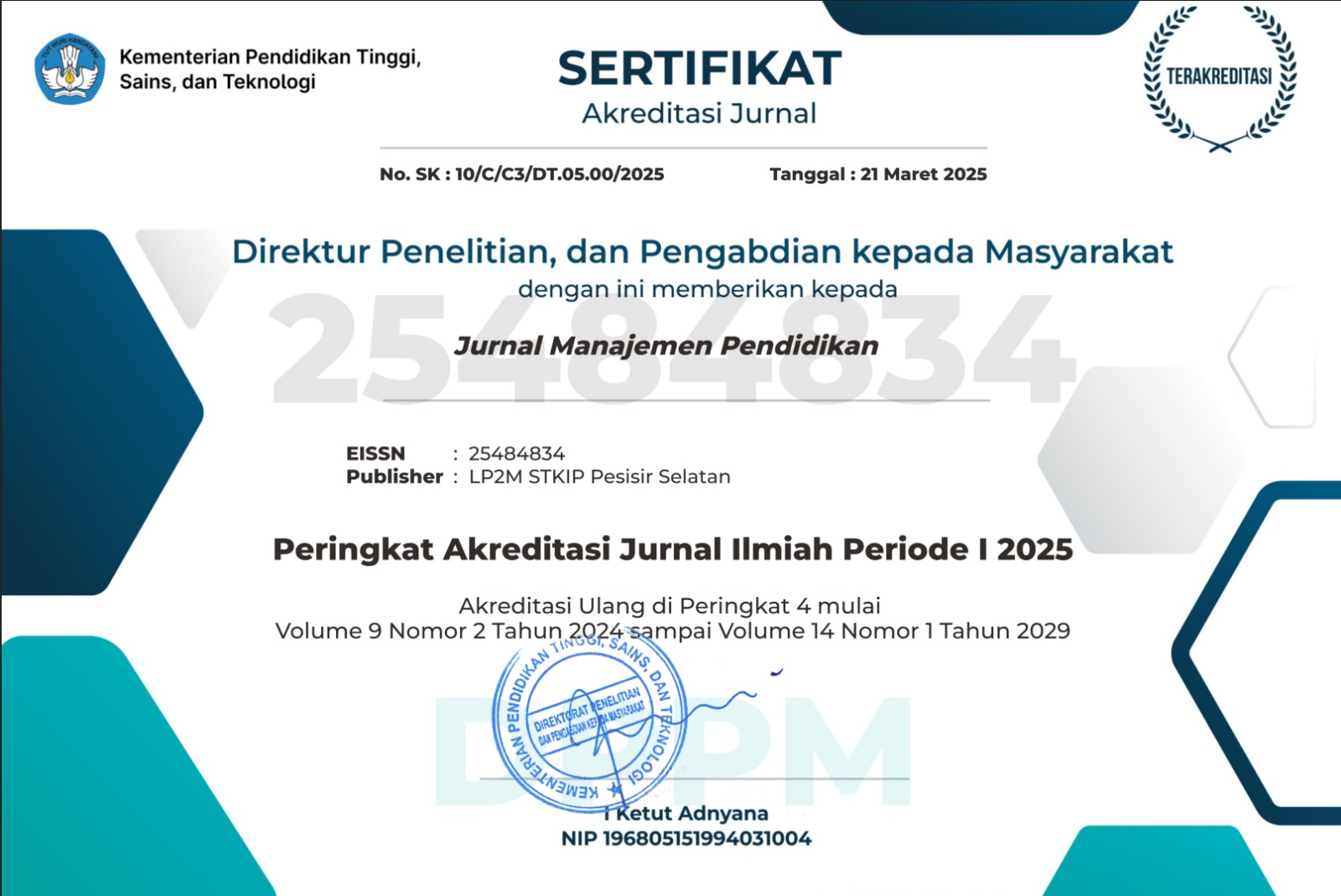
IMPLEMENTASI PEMIKIRAN THOMAS LICKONA TENTANG PENDIDIKAN KARAKTER DALAM MANAJEMEN PENDIDIKAN ISLAM
DOI:
https://doi.org/10.34125/jmp.v11i1.1239Keywords:
Pendidikan Karakter Thomas Lickona Manajemen Pendidikan IslamAbstract
This study was motivated by the moral crisis in education, marked by an increase in cases of violence, bullying, and ethical degradation in schools. This situation highlights the need for education that emphasizes not only cognitive aspects but also character building in students. The purpose of this study is to analyze Thomas Lickona's thoughts on character education and examine its relevance for implementation in Islamic education management. This study was conducted qualitatively using library research. Data were obtained through library documentation, namely books, scientific journal articles, and relevant previous research results. Data analysis was conducted using descriptive qualitative techniques through the stages of data reduction, presentation, and conclusion drawing. The results of this study indicate that the three main components of character education according to Lickona are moral knowing, moral feeling, and moral action. All three are relevant to Islamic values such as piety, justice, and responsibility. The implementation of Lickona's ideas in Islamic education management can be done through value-based planning, exemplary teachers and leaders, the cultivation of a religious culture and local wisdom, and good administration.
References
Abdul Haq, E., Wasliman, I., Sauri, R. S., Fatkhullah, F. K., & Khori, A. (2022). Management of Character Education Based on Local. Nidhomul Haq : Jurnal Manajemen Pendidikan Islam, 7(1), 73–91. https://doi.org/10.31538/ndh.v7i1.1998
Aini, S. Q., & Syamwil, F. (2020). Konstruksi pendidikan karakter siswa melalui keteladanan guru di sekolah. MANAGERE: Indonesian Journal of Educational Management, 2(2), 149–156.
Ali, A., Kristiawan, M., & Fitriani, Y. (2021). Implementasi Pendidikan Karakter Berbasis Budaya Sekolah. Jurnal Pendidikan Tambusai, 5(1), 2063–2069.
Almubarok, F. (2018). Keadilan Dalam Perspektif Islam. ISTIGHNA: Jurnal Pendidikan Dan Pemikiran Islam, 1(2), 115–143.
Annisa, A. N., Ismail, M. S., & M. (2024). Pendidikan Karakter Persepektif Thomas Lickona (Analisis Nilai Islami Dalam Buku Educating for Character). El-Madib: Jurnal Pendidikan Dasar Islam, 3(2), 102–115. https://doi.org/10.51311/el-madib.v4i1.611
Anshori, M., Rakhmawan, Z., & Nurhayati, N. (2025). Implementation of Islamic Character Building Management Between Educators and Student in Improving Spiritual Competence at Namira Tahfizul Qur’an Elementary School. (Jmsp) Jurnal Manajemen Dan Supervisi Pendidikan, 9(3), 295–309. https://doi.org/10.17977/um025v9i32025p295
Arif, M., Abdurakhmonovich, Y. A., & Dorloh, S. (2023). Character education in the 21st century: The relevance of Abdul Wahhab Ash Syarani’s and Thomas Lickona’s concepts. Islamic Review: Jurnal Riset Dan Kajian Keislaman, 12(1), 35–58.
Arif, M., Chapakiya, S., & Dewi, A. Y. (2024). Character Education in Indonesia Islamic Elementary Schools: A Systematic Literature Review (2014-2024). J-Pai : Jurnal Pendidikan Agama Islam, 11(1), 1–20. https://doi.org/10.18860/jpai.v11i1.29301
Arifin, B. (2015). Eksistensi Maqasid al-Shari’ah Imam aL-Syathiby Dalam Perkembangan Hukum Ekonomi Syari’ah. At-Tahdzib: Jurnal Studi Islam Dan Muamalah, 3(2), 75–99.
Azizah, K. N., Kusumaningrum, P. H., Febriana, R. P., & Rawanoko, S. E. (2024). Implementation Of Character Education Through Positive School Culture In Elementary Schools. Cakrawala: Journal of Citizenship Teaching and Learning, 2(2), 113–122. https://doi.org/10.70489/7w2zfy79
Berkowitz, M., & Bier, M. (2020). What Works in Character Education.
Bilbina, A., Nadila, A., Febriayu, N., & Alfalisa, U. Y. (2024). Pembelajaran PAI Berbasis Kompetensi Sosial untuk Meningkatkan Empati Siswa. Fatih: Journal of Contemporary Research, 1(2), 172–181.
Cahyani, N. D., Luthfiyah, R., Apriliyanti, V., & Munawir, M. (2024). Implementasi pendidikan agama Islam dalam penanaman budaya religius untuk meningkatkan pembentukan karakteristik Islami. Mimbar Kampus: Jurnal Pendidikan Dan Agama Islam, 23(1), 477–493.
Creswell, J. (2015). Educational research, planning, conducting, and evaluating quantitative and qualitative. Pearson Education.Inc.
Damariswara, R., Wiguna, F. A., Khunaifi, A. A., Zaman, W. I., & Nurwenda, D. D. (2021). Penyuluhan Pendidikan Karakter Adaptasi Thomas Lickona. Dedikasi Nusantara: Jurnal Pengabdian Masyarakat Pendidikan Dasar, 1(1), 25–32. https://doi.org/10.29407/dedikasi.v1i1.16057
Darwanti, A., Fauziati, E., Fathoni, A., & Minsih, M. (2025). Perspektif Moral Knowing Thomas Lickona Pada Pembentukan Karakter Disiplin Siswa Di Sekolah Dasar. Cetta: Jurnal Ilmu Pendidikan, 8(3), 1–11.
Della Rahmadani, N., Lestari, S. R., & Astuti, R. W. (2024). Implikasi Pelanggaran Privasi Anak dalam Bermedia Sosial Terhadap Kesehatan Mental di Sekolah Dasar. Harakat An-Nisa: Jurnal Studi Gender Dan Anak, 9(2), 55–62.
Elyunusi, M. J., Rusijono, R., & Izzati, U. A. (2022). Character Education of Students in Pondok Modern Darussalam (PMD) Gontor in Thomas Lickona Theory Perspective. Scaffolding: Jurnal Pendidikan Islam Dan Multikulturalisme, 4(2), 415–429. https://doi.org/10.37680/scaffolding.v4i2.1622
Fadillah, I. F. (2023). Analisis konsep taqwa dalam al-Quran: Studi terhadap ayat-ayat yang menyebutkan taqwa. AKADEMIK: Jurnal Mahasiswa Humanis, 3(3), 110–119.
Hadi, M. Y., & Prayogi, D. S. T. (2025). Managing Islamic School Culture to Develop Students’ Religious Character. Journal of Educational Research and Practice, 3(2), 255–275. https://doi.org/10.70376/jerp.v3i2.304
Hadi, Y., Kholis, N., Remanita, Y., & Harta, L. I. (2025). A Systematic Literature Review on Character Education Strategies in Primary and Secondary Schools. Journal of Educational Research and Practice, 3(2), 321–340. https://doi.org/10.70376/jerp.v3i2.389
Hafizallah, Y. (2024). The Relevance of Thomas Lickona ’ s Character Education Concept and its Implication for Islamic Education in Schools. IJCES, 1(1), 50–63.
Hidayat, M., & Subando, J. (2024). Strategi Penanaman Nilai-Nilai Karakter Dalam Mencegah Degradasi Moral Siswa Pada Era Digital. Didaktika: Jurnal Kependidikan, 13(001 Des), 523–534.
Huda, S., Sarifudin, M., Humaidi, A., & Idris, S. (2022). The Concept of Character Learning: A Comparative Study of Al-Ghazali and Thomas Lickona ’s Perspectives. Dayah: Journal of Islamic Education, 5(1), 35–52. https://doi.org/10.22373/jie.v5i1.11974
Huda, N., Widodo, B. S. K., & Aseri, M. W. (2024). Strategies for Strengthening Character Education in Islamic Boarding Schools Through Extracurricular Activities. Munaddhomah: Jurnal Manajemen Pendidikan Islam, 5(3), 354–366. https://doi.org/10.31538/munaddhomah.v5i3.1397
Huda, S., Sarifuin, M., Munifah, Humaidi, A., Idris, S., & Mawardi. (2022). The Concept of Character Learning : A Comparative Study of Al-Ghazali and Thomas Lickona ’ s Perspectives. Dayah: Journal of Islamic Education, 5(1), 35–52. https://doi.org/10.22373/jie.v5i1.11974
Husni, R., & Norman, E. (2015). Deliberalisasi Pendidikan Karakter “respect and responsibility” Thomas Lickona. Jurnal Tawazun, 8(2).
Iksal, I., Hayani, R. A., & Aslan, A. (2024). Strengthening Character Education as a Response to the Challenges of the Times. Indonesian Journal of Education (INJOE), 4(3), 761–774.
Izzati, U. A., Bachri, B. S., Sahid, M., & Indriani, E. D. (2019). Character Education: Gender Differences in Moral Knowing, Moral Feeling, and Moral Action in Elementary Schools in Indonesia. Journal for the Education of Gifted Young Scientists, 7(3), 547–556. https://doi.org/10.17478/jegys. 597765 1
Kuliyatun, K. (2020). Kajian Hadis: Iman, Islam dan Ihsan dalam Perspektif Pendidikan Agama Islam. Edugama: Jurnal Kependidikan Dan Sosial Keagamaan, 6(2), 110–122.
Kurniasih, H., Utari, V. Y. D., & Akhmadi. (2018). Character Education Policy and Its Implications for Learning in Indonesia’s Education System. Research on Improving Systems of Education, 2016, pp 1-7.
Kurniawan, S., & Fitriyani, F. N. (2023). Thomas Lickona ’ s Idea on Character Education Which Builds Multicultural Awareness : Its Relevance for School / Madrasah in Indonesia The theme of character education has clearly been written a lot . Some of them explore character education as an importa. At-Tadzkiyyah: Jurnal Pendidikan Islam, 14(1), 33–53.
Latuapo, A. (2022). Strengthening Character Education in Facing the Moral Crisis of Students that Hit the World of Education. International Journal of Health Sciences, 6(S1), 10310–10318. https://doi.org/10.53730/ijhs.v6nS1.7441
Lickona, T. (2013). Moral development in the elementary school classroom. In Handbook of moral behavior and development (pp. 143–162). Psychology Press.
Lubis, D. M., Lubis, R. N., & Lubis, S. W. D. (2022). Peran dan Fungsi Tauhid Dalam Kehidupan Sosial. TARBIYAH: Journal of Educational Science and Teaching, 1(1), 1–5.
Maulana, N. (2023). Toward Sustainable Higher Education: Integrating Soft Skill Development into Business School Curriculum in Indonesia. Journal of Law and Sustainable Development, 11(4 e0325), 1–15. https://doi.org/10.55908/sdgs.v11i4.325
Munawarsyah, M., Fakhrurridha, H., & Muqowim, M. (2024). Character Education for Teenagers in the Era of Society 5.0 Thomas Lickona’s Perspective. Edukasia: Jurnal Pendidikan Dan Pembelajaran, 5(2), 127–138. https://doi.org/10.62775/edukasia.v5i2.984
Poláková, M., Suleimanová, J. H., Madzík, P., Copuš, L., Molnárová, I., & Polednová, J. (2023). Soft Skills and Their Importance in the Labour Market Under the Conditions of Industry 5.0. Heliyon, 9(8 e18670), 1–20. https://doi.org/10.1016/j.heliyon.2023.e18670
Purwati, P., Japar, M., Qomariyah, L., & Tentama, F. (2024). Moral Knowing, Moral Feeling, and Moral Action in Reflecting Moral Development of Students in Junior High School. International Journal of Evaluation and Research in Education, 13(3), 1602–1609. https://doi.org/10.11591/ijere.v13i3.25499
Putra, N. P. A. (2023). Analisis Kasus Kekerasan Dalam Pendidikan (Studi Kasus Penganayaan Guru Terhadap Siswa Di Jogoroto-Jombang). Jurnal Dinamika Sosial Budaya, 25(1), 101–106.
Putriana, M., & Darmawan, T. (2021). National Character Education Policy in Law Number 23 0f 2019. Al-Ishlah: Jurnal Pendidikan, 13(2), 920–926. https://doi.org/10.35445/alishlah.v13i2. 636
Rijal, A., Kosasih, A., & Nurdin, E. S. (2022). Thomas Lickona and Yusuf Qardhawi: Creating Value for Character Education Through Narrative. International Conference on Language, Education, and Social Science (ICLESS 2022), 15–24. https://doi.org/10.2991/978-2-494069-15-2_3
Rindrayani, S. R. (2020). The Implementation of Character Education in Indonesia High School Curriculum Program. Universal Journal of Educational Research, 8(1), 304–312. https://doi.org/10.13189/ujer.2020.080137
Rosarian, A. W., & Dirgantoro, K. P. S. (2020). Upaya guru dalam membangun interaksi siswa melalui metode belajar sambil bermain [teacher’s efforts in building student interaction using a game based learning method]. JOHME: Journal of Holistic Mathematics Education, 3(2), 146–163.
Rosidah, R., Sasmita, N., Wisataone, V., & Hanafi, M. (2022). Character Development Strategies Through the Soft Skills Training to Students for Job Readiness. Journal of Social Studies, 18(2), 207–216. https://doi.org/10.21831/jss.v18i2.
Sari, E. D. P., Puspitasari, I., Purwandari, G. A., & Sari, R. P. (2023). Character Education to Boost the Quality of Students’ Soft Skills in the Indonesian English Class. A Journal of Culture, English Language, Teaching & Literature, 23(1), 3–7. https://doi.org/doi.org/10.24167/celt.v23i1.5995
Sintasari, D. P., Amanda, R. A., & Herlinasari, A. S. (2024). Pengaruh perundungan terhadap anak di lingkungan sekolah. MARAS: Jurnal Penelitian Multidisiplin, 2(3), 1369–1375.
Somantri, G. R. (2005). Memahami Metode Kualitatif. MAKARA, SOSIAL HUMANIORA, 9(2), 57–65.
Sugiyono. (2012). Metode Penelitian Pendekatan Kualitatif, Kuantitatif, dan R@D. Alfabeta.
Suhermanto, Mansyuri, A., Ma’arif, M. A., & Sebgag, S. (2024). Implementation of Character Education in PAI Subjects in the Independent Curriculum. Fikroh: Jurnal Pemikiran Dan Pendidikan Islam, 17(1), 1–10. https://doi.org/10.37812/fikroh.v17i1.1394
Suryanto, A., Saliman, S., & Sudrajat, S. (2023). The Weakness of Character Education in Indonesian Teenager. Jurnal Penelitian Pendidikan IPA, 9(1), 3869–3874. https://doi.org/10.29303/jppipa.v9i5.3721
Tan, W., Seroja, T. D., Santoso, I. R., Adiyanto, A., Adristy, B. S., Lee, M., & Aprilia, V. (2022). Pencegahan pelecehan seksual di lingkungan sekolah. National Conference for Community Service Project (NaCosPro), 4(1), 362–366.
Uceda-Pintado, I. L., Riojas-Cisneros, J. M., & Hernández-Fernández, B. (2022). Soft Skills and Comprehensive Training in Teachers : A Systematic Review. International Journal of Health Sciences, 6(S5), 9611–9632. https://doi.org/10.53730/ijhs.v6nS5.10723