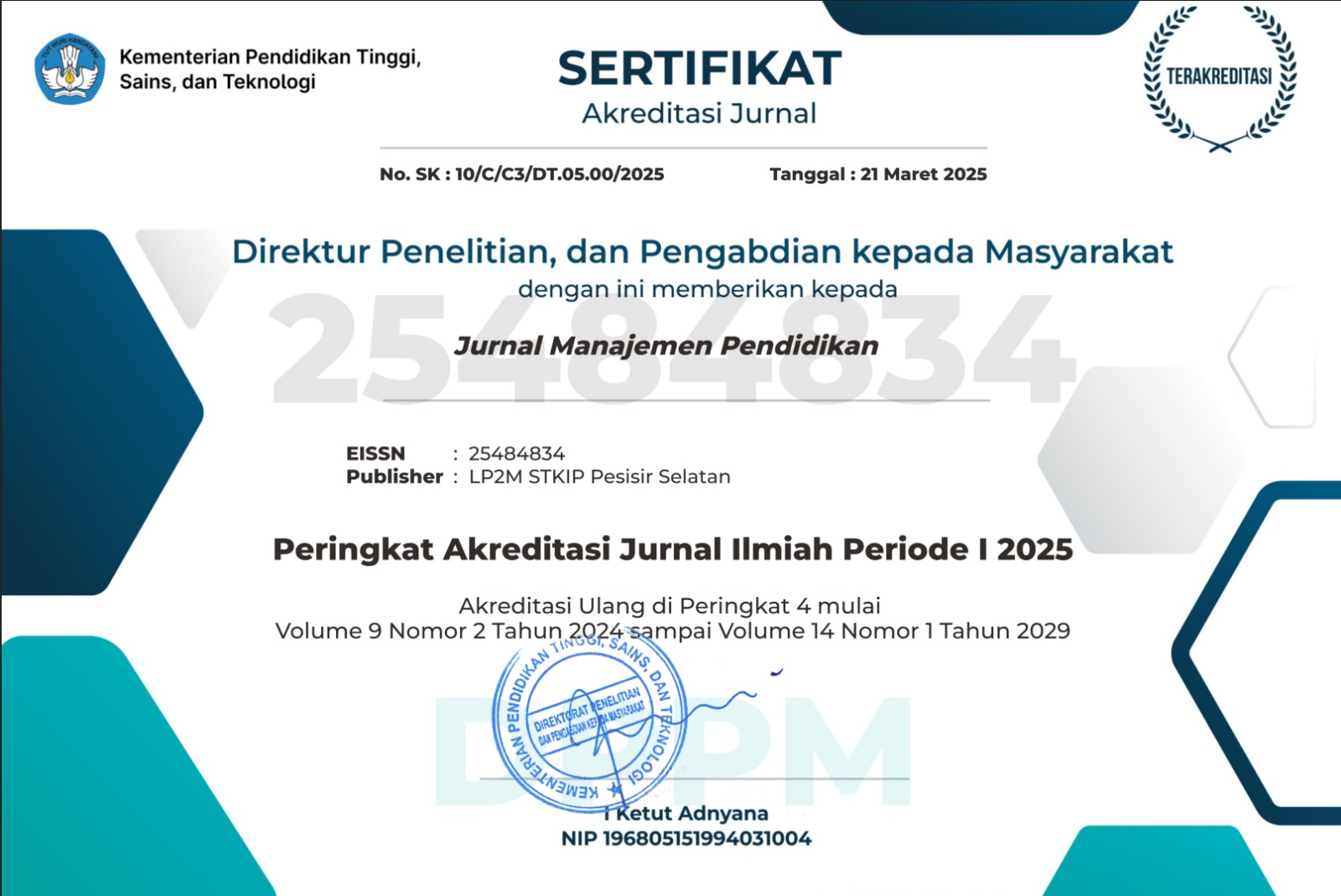
EPISTEMOLOGI KEILMUAN PENDIDIKAN ISLAM DI PESANTREN SALAFIYAH BAHRUL ULUM SIMO BOYOLALI
DOI:
https://doi.org/10.34125/jmp.v10i4.1407Keywords:
Epistemologi, Pesantren Salafiyah, Ta’dib, Kitab KuningAbstract
This study aims to examine the epistemology of Islamic education knowledge at Bahrul Ulum Salafiyah Pesantren (Simo, Boyolali), focusing on how sources of knowledge (revelation, reason, textual tradition, and pedagogical experience) are positioned, integrated, and validated in learning practices. A qualitative case study design was employed. Data were collected through in-depth interviews and source triangulation involving two teachers (Muhammad Ali Rohmatullah and Muhammad Umar Al-Faruq) and one alumnus (Muhammad Usman Al-Ghoni), followed by thematic analysis. The findings indicate that revelation functions as the axiological horizon and educational purpose, the mu‘tabar textual tradition (classical Islamic texts) serves as the primary reference, reason operates as an instrumental faculty within the boundaries of tradition, and pedagogical experience becomes an internalization mechanism through bandongan, sorogan, and repetition (takrīr). Knowledge validation is established through a layered chain of legitimacy: textual accuracy, teacher verification (tashih), and reinforcement through authoritative scholarly references. These patterns align with al-Ghazali’s ethical-spiritual orientation of knowledge, al-Attas’s concept of ta’dib as the core of education, and Ibn Khaldun’s principles of gradualism and repetition (tadrīj–takrīr) in forming stable competencies (malakah). The study implies that pesantren learning design should strengthen authoritative references and adab while directing reason constructively to sustain a coherent and productive integration of knowledge.
References
Abidin, M. Z. (2023). Manajemen pembelajaran kitab kuning di pesantren salafiyah. IHTIROM: Jurnal Manajemen Pendidikan Islam, 2(1), 223–244.
Al-Amiin S., M. T., & Rahman, M. M. (2025). Sorogan kitab: Eksistensi, enkulturasi dan pewarisan metode ilmiah pesantren. Jurnal Kajian Islam Interdisipliner, 10(1), 93–122. https://doi.org/10.14421/jkii.v10i1.1374
Aswanda, J., Amril, & Sawaluddin. (2024). Epistemologi ilmu pendidikan agama Islam: Konsep epistemologi perspektif Barat dan Islam. Al-Ihda’: Jurnal Pendidikan dan Pemikiran, 19(1), 1276–1289. https://doi.org/10.55558/alihda.v19i1.114
Hak, N., Maharsi, Muhsin, I., Wildan, M., Musa, M., Maimunah, S., & Fatiyah. (2021). Melacak transmisi keilmuan pesantren: Kitab kuning, hubungan kiai-santri, & genealogi pesantren salafiyah di Jawa Barat. Semesta Aksara.
Indah. (2025). Epistemologi pendidikan Islam: Analisis konseptual terhadap integrasi wahyu dan akal. Islamijah: Journal of Islamic Social Sciences, 6(2).
Marwiji, M. H. (2024). Transformasi kurikulum dan sistem pembelajaran di pondok pesantren salaf pada era disrupsi. Ta’allum: Jurnal Pendidikan Islam, 12(1), 1–23. https://doi.org/10.21274/taalum.2024.12.1.1-23
Nugraha, S. W., Nurlaila, N., Rojab, A. R., & Agustin, S. (2023). Ibn Khaldun’s epistemology and its relevance to the Islamic Religious Education curriculum in Indonesia. Jurnal Filsafat Indonesia, 6(3). https://doi.org/10.23887/jfi.v6i3.57097
Nur Fahmi, F., & Sukandar, A. (2025). Holistic education in the perspective of Ibn Khaldun: The relevance of the concepts of tadrīj, takrīr, and asabiyyah. At Turots: Jurnal Pendidikan Islam, 7(1), 605–617. https://doi.org/10.51468/jpi.v7i1.1046
Palem, N. H., Amin, M., Adinda, F., Dahlan, Z., & Al Farabi, M. (2025). Wahdatul ulum Imam Al-Ghazali dalam epistemologi. IKAMAS: Manajemen Pendidikan Islam, 5(1). https://doi.org/10.62361/ikamas.v5i1.173
Puspitasari, E., & Yuliana, A. T. R. D. (2022). Syed Muhammad Naquib al-Attas’ concept of Islamizing science and its relevance to Islamic education. Al-Misbah (Jurnal Islamic Studies), 10(2), 91–108. https://doi.org/10.26555/almisbah.v10i2.6484
Setiawan, A. S. R., Da’i, R. A. N. R., Fuad, A., & Zaim, M. A. A. (2025). Islamisasi model Syed Mumammad Naquib Al-Attas dan relevansinya terhadap konsep pendidikan Islam. EL-FIKR: Jurnal Aqidah dan Filsafat Islam, 6(1), 64–75. https://doi.org/10.19109/el-fikr.v6i1.28491
Suandi, & Herman. (2024). The concept of Islamic education according to Ibn Khaldun. International Journal of Education, Language, and Social Science, 2(1). https://doi.org/10.62612/ijelass.v2i1.35