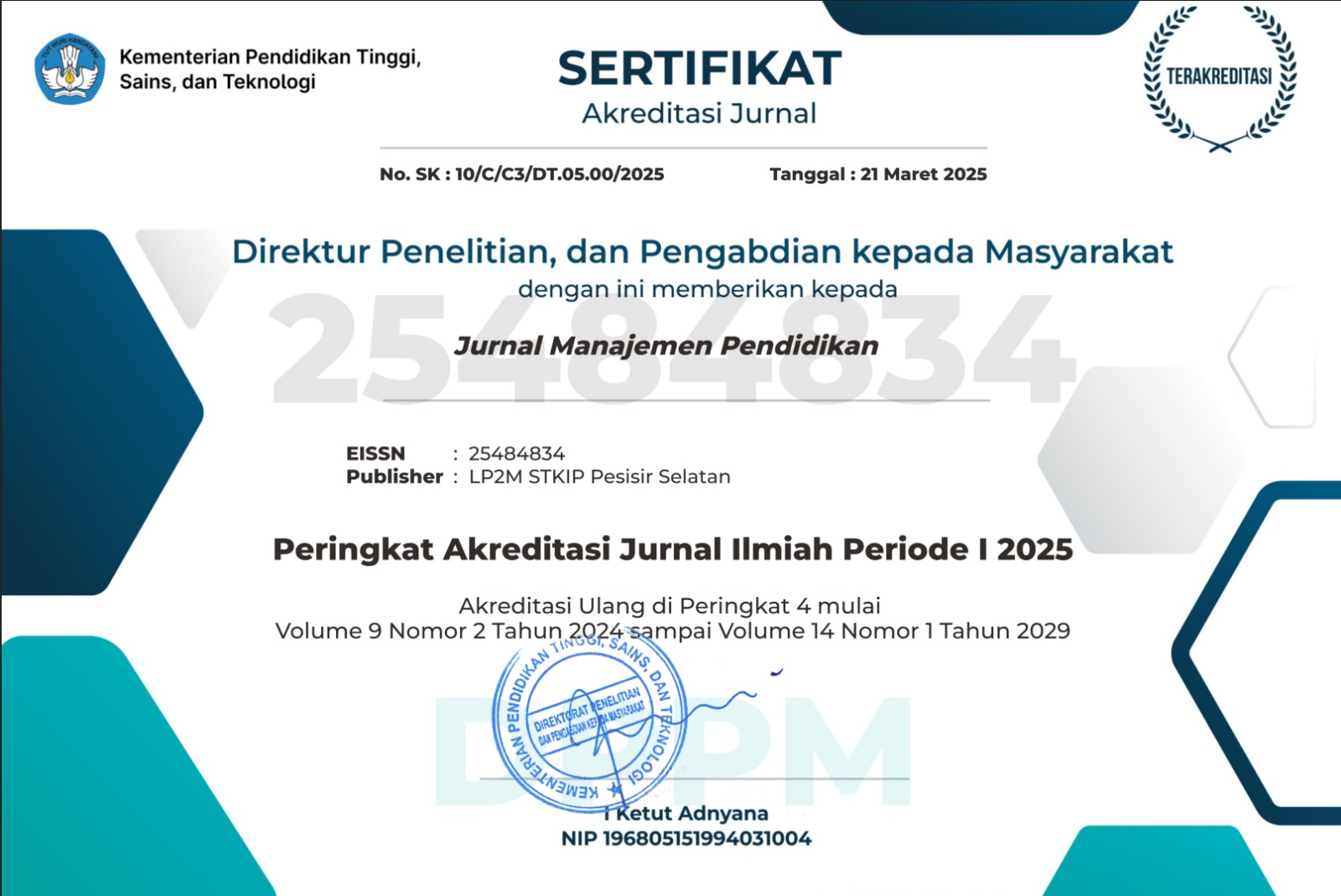
PENERAPAN DIGITALISASI LAYANAN PERPUSTAKAAN HUBUNGANNYA DENGAN KEPUASAN PENGUNJUNG
DOI:
https://doi.org/10.34125/jmp.v11i4.3501Keywords:
Digital Library , Service Visitor Satisfaction , Madrasah AliyahAbstract
Objective: This study aims to determine the level of digital library service implementation using the Technology Acceptance Model (TAM), identify the level of visitor satisfaction using SERVQUAL theory, and analyze the relationship between digital library service implementation and visitor satisfaction at MAN 1 Kota Bandung. Methods: This study used a quantitative approach with a correlational descriptive method. The population consisted of 836 students, with a sample of 90 respondents selected using the Slovin formula and proportional stratified sampling. Results: The research result indicate that the implementation of digital library services is in the “High” category with a mean score of 3.74. Visitor satisfaction is also in the “High” category with a mean score of 3.72. The correlation analysis shows a strong, positive, and significant relationship with a Pearson correlation coefficient of 0.722 (significance<0.0001). Novelty:This research integrates TAM and SERVQUAL models within a Madrasah Aliyah context, which is distinct from secular school contexts often found in previous studies, providing empirical evidence on Islamic educational library management.
References
Adriadi, A. S., Yunita, N., & Marlina, S. (2025). Sistem informasi e-library pada smk yadika 4
ciledug. Jurnal Digit, 15(1), 41–53. https://doi.org/https://doi.org/10.51920/jd.v15i1.420
Ahnaffaiz, M. muhammad, & Sri, U. W. (2024). Inovasi Pengembangan Aplikasi
Perpustakaan digital Untuk Optimalisasi Akses Pengeahuan dengan Pendekatan
Metode Waterfall. Jurnal Informatika Teknologi dan Sains (JINTEKS), 919–928.
https://doi.org/https://doi.org/10.51401/jinteks.v6i4.4870
Ardina, P., Eliza, D., Hasibuan, I. H., & Ananda, M. R. (2024). Pengelolaan Perpustakaan :
Studi Kasus Di Perpustakaan Universitas Prima Medan. 4(2), 93–98.
https://doi.org/https://doi.org/10.24821/jap.v4i2.11524
Azizah, W. N., & Dewi, D. A. (2022). Mempengaruhi Gaya Anak dan Etika Pancasila. 6(1),
1426–1431. https://doi.org/https://doi.org/10.56724/ladu.v4il.267
Damayanty. (2016). Sistem Layanan Informasi Di Perpustakaan Pada Abad Ke-21. Edulib, 2.
https://doi.org/https://doi.org/10.17509/edulib.v2i1.2262
Fajriyah, A. D., Anwar, R. K., Chaerani, S., Amar, D., & Rukmana, E. N. (2025). Peran
Perpustakaan Sekolah Dalam Mendukung Pendidikan Jarak Jauh : Sebuah Tinjaun
Naratif. 15(1), 18–28.
Fandy, T. (2011). Service Management Mewujudkan Layanan Prima Edisi 4. CV Andi Offset.
Fathoni, M. I., Siyamto, Y., Dan, P., Jurnal, K., & Keuangan, I. (2022). Pengaruh Kualitas
Pelayanan Terhadap Kepuasan Pengunjung Perpustakaan Di Dinas Perpustakaan Dan
Kearsipan. 1(2). https://doi.org/https://doi.org/10.53088/jikab.v1i2.16
Heris, H., Wahyu, H., & Ilham, F. (2020). Manajemen Perpustakaan Dalam Meningkatkan
Minat Baca Peserta Didik. ISEMA, 5(1), 113–126.
https://doi.org/10.15575/isema.v5i1.6151
Meliala, A. K., Suherman, U., & Muhammad, F. (2024). Peran Pengorganisasian di Sekolah
dalam Manejemen Bimbingan dan Konseling. 9(2), 1097–1104.
Oktarina, R. P., Syaputra, R. E., Munawwaroh, S., Abida, J., & Puspita, A. (2025).
Implementasi Manajemen dan Digitalisasi Perpustakaan di SMA Negeri 13 Surabaya. 4,
1–10. https://doi.org/https://doi.org/10.47134/ptk.v2i4.1678
Parasuraman, A, Z. V., & L, B. L. (1998). SERVQUAL : A Multiple-Item Scale for Measuring Consumer Perceptions of Service Quality.
Saputri, L., Razak, I. A., Studi, P., Pendidikan, M., Pendidikan, F. I., & Gorontalo, U. N.
(2023). Digitalisasi Perpustakaan Sekolah. 3, 189–202.
Shafiq, H. (2025). Perceived Usefulness, Perceived Ease Of Use, dan Quality untuk
Mengakselerasi Intention to Use melalui Technology Acceptance Model pada Konsumen
E-wallet Generasi Y dan Z.
Sopwandin, I., Nurmila, N., & Hidayat, W. (2019). Fungsi-Fungsi Manajemen di Perpustakaan
Madrasah. 2(1), 23–32. https://doi.org/https://doi.org/10.32940/mjiem.v2i1.117
Sugiyono. (2020). Metode Penelitian Kuantitatif, Kualitatif, dan R&D (2nd ed) (2 ed.).
Alfabeta.
Suryanto. (2018). Pengaruh Penerapan Technology-Based Self Service Terhadap Kepuasan
Siswa Pada Layanan Peminjaman Di Perpustakaan SMA Negeri 5 Magelang.
Syafrida, S. H. (2021). Metodologi Penelitian (1 ed.). Penerbit KBM Indonesia.
https://repositori.uma.ac.id/bitstream/123456789/16455/1E-Book Metodologi Penelitian
Syafrida.pdf
Umi, S., Azizah, I., Slamet, B. R., & Muhammad, S. (2023). Pengaruh Kualitas Pelayanan
dan Kinerja Pegawai terhadap Kepuasan Pengunjung di Perpustakaan Umum
Kabupaten Brebes. 1(3), 232–243.
Undang-Undang (UU) Nomor 43 Tahun 2007 tentang Perpustakaan, Pub. L. No. 43 (2007).
Usman, A., Aang, K. D., & Muhsi. (2023). Evaluasi Kepuasan Penggunaan Aplikasi M-Health
Covid-19 SatuSehat :EUCS dan Mible Service Quality (M-S-QUAL). 5(4), 558–565.
https://doi.org/https://doi.org/10.51401/jinteks.v5i4.2779
Wahid, N., & Fajar, S. (2018). Tinjauan Terhadap Kesiapan Pustakawan dalam Menghadapi
Disrupsi di Era Library 4.0: Sebuah literatur Review. Khizanah Al-Hikmah, Vol.6.