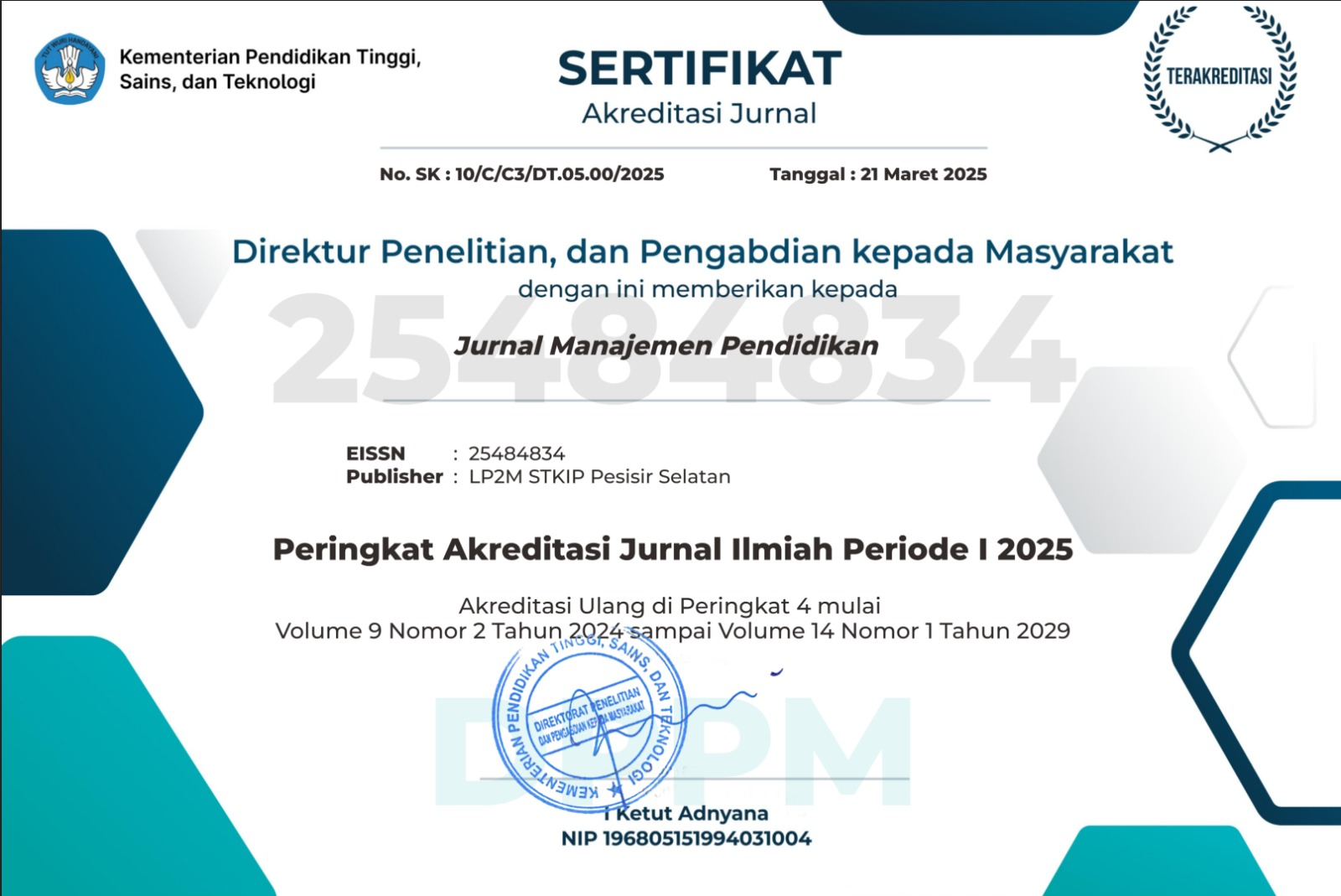
PERILAKU KONSUMEN DALAM PENGAMBILAN KEPUTUSAN PEMBELIAN SECARA ONLINE MELALUI TIKTOK SHOP DI KALANGAN MAHASISWA STIA LPPN PADANG
DOI:
https://doi.org/10.34125/jmp.v11i5.3608Keywords:
Consumer Behavior, Purchase Decision, TikTok Shop, Social Commerce, StudentsAbstract
This study examines consumer behavior in online purchasing decisions through TikTok Shop among Business Administration students at STIA LPPN Padang and identifies factors influencing their decisions. A descriptive qualitative approach was applied to 20 students who actively used TikTok and had purchased products through TikTok Shop. Data were collected through interviews, observation, and documentation and analyzed using the interactive model of Miles, Huberman, and Saldaña, including data condensation, data display, and conclusion drawing and verification. The results show that purchasing decisions involved need recognition, information search, evaluation of alternatives, purchase decisions, and post-purchase assessment, although these stages did not always occur sequentially. Students considered product reviews, ratings, price, quality, brand reputation, seller credibility, financial ability, platform convenience, payment methods, influencers, friends, and content creators. Promotional content could increase interest and accelerate purchasing decisions, but students continued to compare information and adjust purchases to their needs and available funds. The novelty of this study lies in identifying TikTok Shop as a digital environment that simultaneously functions as a transaction channel, information source, and promotional space, where purchasing decisions are shaped through the interaction between individual judgment and continuous digital stimuli.
References
Khoi, N. H., Le, A. N. H., & Nguyen, P. D. (2023). A moderating-mediating model of the urge to buy impulsively in social commerce live-streaming. Electronic Commerce Research and Applications, 60, 101286. https://doi.org/10.1016/j.elerap.2023.101286
Kotler, P., & Keller, K. L. (2016). Marketing management (15th ed.). Pearson Education.
Kotler, P., Keller, K. L., & Chernev, A. (2022). Marketing management (16th ed.). Pearson.
Momentum Works. (2025). TikTok Shop in the U.S. 2024: Trends, insights & the road ahead. Momentum Works & Tabcut.
Mou, J., & Benyoucef, M. (2021). Consumer behavior in social commerce: Results from a meta-analysis. Technological Forecasting and Social Change, 167, 120734. https://doi.org/10.1016/j.techfore.2021.120734
Muhamad, N. (2025, January 9). Indonesia masuk jajaran penyumbang GMV terbesar di TikTok Shop 2024. Databoks Katadata.
Ofori, H., & Kang, J. (2022). Impact of SNS behavior on social commerce purchase intention: Focusing on the mediating effect of social capital. International Journal of Software Innovation, 10(1), 1-12. https://doi.org/10.4018/IJSI.309959
Onofrei, G., Filieri, R., & Kennedy, L. (2022). Social media interactions, purchase intention, and behavioural engagement: The mediating role of source and content factors. Journal of Business Research, 142, 100-112. https://doi.org/10.1016/j.jbusres.2021.12.031
Sadeli, A. H., Perdana, T., Deliana, Y., & Onggo, B. S. (2023). Consumers’ purchase behavior in short food supply chains using social commerce in Indonesia. Journal of Cleaner Production, 386, 135812. https://doi.org/10.1016/j.jclepro.2022.135812
Sari, P. N., & Karsono, L. D. P. (2023). Factors affecting customer’s purchase decision while shopping on TikTok Live: Impulsive buying as a moderator. Relevance: Journal of Management and Business, 6(1), 23-51.
Schiffman, L. G., Kanuk, L. L., & Wisenblit, J. (2010). Consumer behavior (10th ed.). Pearson Education/Prentice Hall.
Shirazi, F., Hajli, N., Sims, J., & Lemke, F. (2022). The role of social factors in purchase journey in the social commerce era. Technological Forecasting and Social Change, 183, 121861. https://doi.org/10.1016/j.techfore.2022.121861
Sugiyono. (2019). Metode penelitian kuantitatif, kualitatif, dan R&D. Alfabeta.
Yang, X. (2022). Consumers’ purchase intentions in social commerce: The role of social psychological distance, perceived value, and perceived cognitive effort. Information Technology & People, 35(8), 330-348. https://doi.org/10.1108/ITP-02-2022-0091