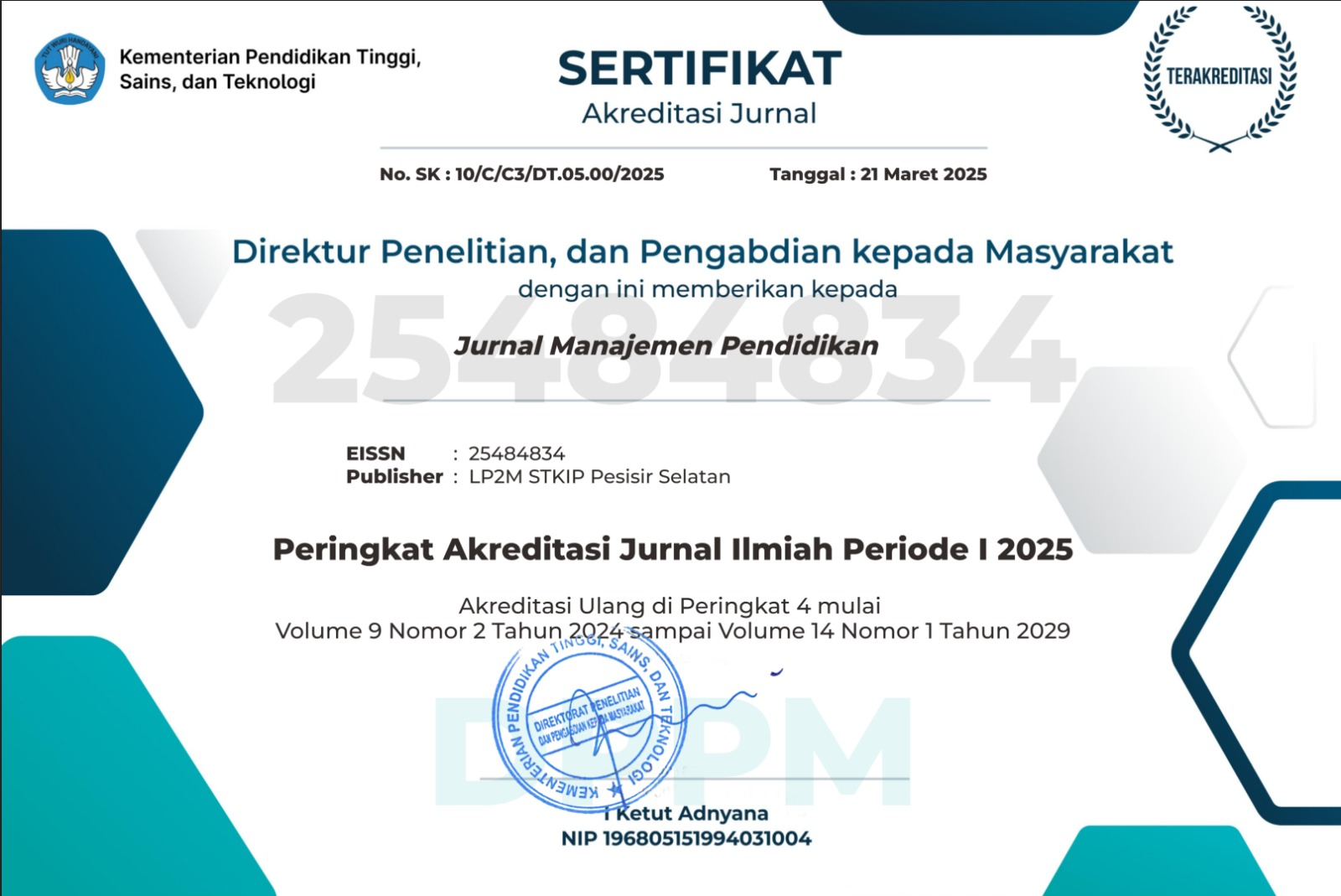
KREDIBILITAS INFLUENCER DALAM MEMBENTUK KEPERCAYAAN DAN KEPUTUSAN PEMBELIAN KONSUMEN
DOI:
https://doi.org/10.34125/jmp.v11i5.3871Keywords:
kredibilitas influencer, kepercayaan konsumen, keputusan pembelian, pemasaran digital, tinjauan literatur integratif.Abstract
The development of digital marketing has encouraged the use of influencers as a strategy to shape consumer perceptions, trust, and purchase decisions. However, influencer marketing effectiveness is not determined solely by popularity or follower count, but also by credibility. This article aims to analyze the role of influencer credibility in building consumer trust and influencing purchase decisions through an integrative literature review. The literature was analyzed thematically by identifying the dimensions of influencer credibility, the mechanisms underlying consumer trust, and their relationships with purchase decisions. The findings indicate that influencer credibility consists of three main dimensions: expertise, trustworthiness, and attractiveness. These dimensions contribute to consumers’ evaluations of information quality and the reliability of influencers’ recommendations. Consumer trust serves as an important mechanism linking influencer credibility to purchase decisions, although this relationship may be influenced by influencer–product congruence, brand image, and parasocial relationships with followers. The review also highlights that purchase intention does not always translate into actual purchasing behavior, as consumer decisions are affected by situational considerations and product characteristics. Therefore, selecting influencers should involve evaluating their expertise, integrity, and relevance to the promoted products rather than relying solely on popularity. This article provides a conceptual synthesis of the relationships among influencer credibility, consumer trust, and purchase decisions, offering insights for further research and the development of more effective digital marketing strategies.
References
Alam, F., Tao, M., Rastogi, R., Mendiratta, A., & Attri, R. (2024). Do Social Media Influencers Influence the Vaccination Drive? An Application of Source Credibility Theory and Uses and Gratification Theory. Technological Forecasting and Social Change, 198, 122973. https://doi.org/10.1016/j.techfore.2023.122973
Ardiansyah, I. N., & Widiastuti, E. (2026). Pengaruh Social Media Marketing dan Influencer Credibility Terhadap Keputusan Pembelian dengan Brand Trust sebagai Variabel Moderating (Studi pada Konsumen Kopi Kenangan di Surakarta). Jurnal Manajemen, Akuntansi, Ekonomi, 5(1), 378–388. https://doi.org/10.59066/jmae.v5i1.2250
Arianti, F., & Hadiprawoto, T. R. (2024). Investigating Social Media Influencers’ Credibility and Religiosity, and The Moderating Role of Hedonic Value on Purchase Intention of Modest Fashion Brands. Indonesian Journal of Business and Entrepreneurship, 10(1), 168–168. https://doi.org/10.17358/ijbe.10.1.168
Bi, N. C., & Zhang, R. (2022). “I Will Buy What My ‘Friend’ Recommends”: The Effects of Parasocial Relationships, Influencer Credibility and Self-Esteem on Purchase Intentions. Journal of Research in Interactive Marketing, 17(2), 157–175. https://doi.org/10.1108/JRIM-08-2021-0214
Chen, C.-F., & Lu, H.-H. (2024). Transforming a Social Media Influencer’s Influential Power to Followers’ Word of Mouth and Purchase Intention: The Role of Brand Attachment, Brand Credibility, and Parasocial Relationship. Journal of Brand Management, 31(4), 415–429. https://doi.org/10.1057/s41262-023-00349-2
Chiu, C. L., & Ho, H.-C. (2023). Impact of Celebrity, Micro-Celebrity, and Virtual Influencers on Chinese Gen Z’s Purchase Intention Through Social Media. Sage Open, 13(1), 21582440231164034. https://doi.org/10.1177/21582440231164034
Cronin, M. A., & George, E. (2023). The Why and How of the Integrative Review. Organizational Research Methods, 26(1), 168–192. https://doi.org/10.1177/1094428120935507
Dema, Y., Mutiarawati, E. V., & Billy, Y. L. (2025). The Role of Micro-Influencers in Social Media Marketing: A Quantitative Study on Purchase Intent Using Source Credibility Theory. Jurnal Ekonomi Perusahaan, 32(1), 8–26. https://doi.org/10.46806/jep.v32i1.1424
Garg, M., & Bakshi, A. (2024). Exploring the impact of beauty vloggers’ credible attributes, parasocial interaction, and trust on consumer purchase intention in influencer marketing. Humanities and Social Sciences Communications, 11(1), 235. https://doi.org/10.1057/s41599-024-02760-9
Han, J., & Balabanis, G. (2024). Meta-Analysis of Social Media Influencer Impact: Key Antecedents and Theoretical Foundations. Psychology & Marketing, 41(2), 394–426. https://doi.org/10.1002/mar.21927
Hr, S. A. M., Kurniawati, K., & Masnita, Y. (2022). Kredibilitas Social Media Influencer Marketing terhadap Minat Beli: Hedonisme Sebagai Moderasi. Jurnal Ilmiah Manajemen dan Bisnis, 23(2), 130–145. https://doi.org/10.30596/jimb.v23i2.11304
Koay, K. Y., Cheah, C. W., & Yap, J. Y. (2024). Self-Influencer Congruence, Parasocial Relationships, Credibility, and Purchase Intentions: A Sequential Mediation Model. Journal of Relationship Marketing, 23(1), 1–20. https://doi.org/10.1080/15332667.2023.2216373
Lou, C., & Yuan, S. (2019). Influencer Marketing: How Message Value and Credibility Affect Consumer Trust of Branded Content on Social Media. Journal of Interactive Advertising, 19(1), 58–73. https://doi.org/10.1080/15252019.2018.1533501
Mang, V., Fennis, B. M., & Epstude, K. (2024). Source credibility effects in misinformation research: A review and primer. Advances.in/Psychology, 2, e443610. https://doi.org/10.56296/aip00028
Mukherjee, A., Mukherjee, A., Iyer, P., & Smith, R. J. (2022). The Retailer’s Puzzle: Influencer Opinions and Consumer-Generated Information. Journal of Consumer Marketing, 39(7), 756–768. https://doi.org/10.1108/JCM-09-2020-4143
Ohanian, R. (1990). Construction and Validation of a Scale to Measure Celebrity Endorsers’ Perceived Expertise, Trustworthiness, and Attractiveness. Journal of Advertising, 19(3), 39–52. https://doi.org/10.1080/00913367.1990.10673191
Pan, M., Blut, M., Ghiassaleh, A., & Lee, Z. W. Y. (2025). Influencer Marketing Effectiveness: A Meta-Analytic Review. Journal of the Academy of Marketing Science, 53(1), 52–78. https://doi.org/10.1007/s11747-024-01052-7
Rahmawaty, P., & Purnama, D. E. (2025). Brand Image Mediates the Relationship between Influencer Credibility and Purchase Decisions among Generation Z. Jurnal Ilmu Manajemen, 22(1), 130–145. https://doi.org/10.21831/jim.v22i1.86427
Saima, & Khan, M. A. (2020). Effect of Social Media Influencer Marketing on Consumers’ Purchase Intention and the Mediating Role of Credibility. Journal of Promotion Management, 27(4), 503–523. https://doi.org/10.1080/10496491.2020.1851847
Volkmer, S. A., & Meißner, M. (2025). Delight my brain and my eyes: Credibility and aesthetic judgments of endorsers. Journal of Retailing and Consumer Services, 84, 104217. https://doi.org/10.1016/j.jretconser.2024.104217
Vu, V. C., Wang, S., Keating, B. W., & Chen, E. Y. (2025). Increasing Social Media Stickiness Through Parasocial Interaction and Influencer Source Credibility. Australasian Marketing Journal, 33(4), 352–370. https://doi.org/10.1177/14413582241306130
Walten, L., & Wiedmann, K.-P. (2023). How Product Information and Source Credibility Affect Consumer Attitudes and Intentions Towards Innovative Food Products. Journal of Marketing Communications, 29(7), 637–653. https://doi.org/10.1080/13527266.2022.2061033
Wang, E. S.-T., & Weng, Y.-J. (2023). Influence of Social Media Influencer Authenticity on Their Followers’ Perceptions of Credibility and Their Positive Word-of-Mouth. Asia Pacific Journal of Marketing and Logistics, 36(2), 356–373. https://doi.org/10.1108/APJML-02-2023-0115
Weismueller, J., Harrigan, P., Wang, S., & Soutar, G. N. (2020). Influencer Endorsements: How Advertising Disclosure and Source Credibility Affect Consumer Purchase Intention on Social Media. Australasian Marketing Journal, 28(4), 160–170. https://doi.org/10.1016/j.ausmj.2020.03.002
Whittemore, R., & Knafl, K. (2005). The Integrative Review: Updated Methodology. Journal of Advanced Nursing, 52(5), 546–553. https://doi.org/10.1111/j.1365-2648.2005.03621.x